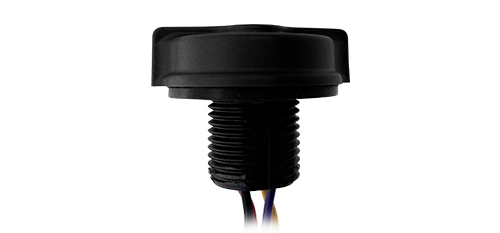
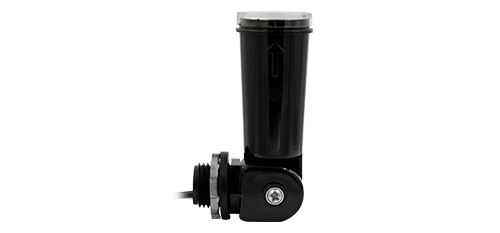
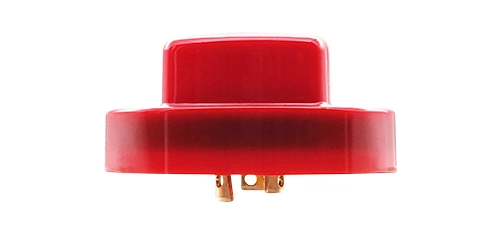
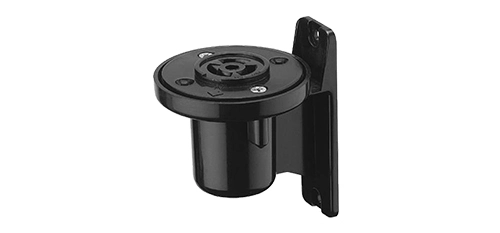
Your photocell light is likely flashing because of mismatched electrical loads between the sensor and modern bulbs, causing rapid cycling in the relay mechanism that struggles to stabilize under varying current demands.
In residential or commercial setups where outdoor illumination plays a key role in security and ambiance, unexpected blinking can disrupt the intended functionality. This behavior often stems from how the sensor interprets power draws, leading to inconsistent switching. Homeowners might notice this after swapping to energy-saving options, while facility managers could see it in larger arrays. Beyond the frustration, it points to deeper compatibility concerns that, if ignored, might shorten component life or raise energy costs. Exploring the triggers, evaluation techniques, and resolution paths can empower users to restore smooth operation. This discussion draws on practical insights from electrical engineering principles, aiming to equip you with actionable knowledge for handling such glitches effectively.
Exploring Electrical Load Mismatches as a Primary Trigger
One of the most overlooked reasons for erratic behavior in sensor-controlled fixtures involves the interplay between the device's internal relay and the attached load. Traditional sensors were designed around incandescent or halogen bulbs, which present a consistent resistive load. When paired with these, the relay—a small electromagnetic switch inside the unit—operates predictably, clicking on or off without hesitation. However, as more users adopt compact fluorescent lamps (CFLs) or other non-linear loads, the dynamics shift. These alternatives introduce capacitive or inductive elements that alter the current waveform, sometimes causing the relay to chatter or oscillate.
This chattering manifests as visible pulsing because the relay attempts to close the circuit but encounters inrush currents or harmonic distortions that force it back open momentarily. For instance, in a backyard setup with multiple pathway lights, if one bulb type dominates while another varies, the collective load can confuse the sensor's threshold detection. Electrical standards highlight that relays rated for 1000W might falter below 50W due to insufficient holding current, a scenario common in low-power configurations. Data from component testing labs indicate that up to 40% of reported instabilities trace back to such mismatches, particularly in retrofitted systems where old sensors meet new lighting tech.
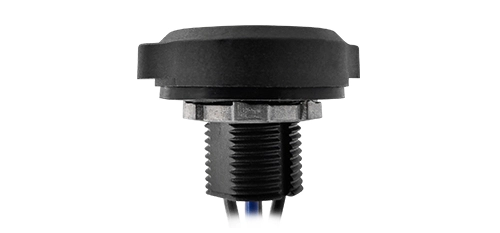
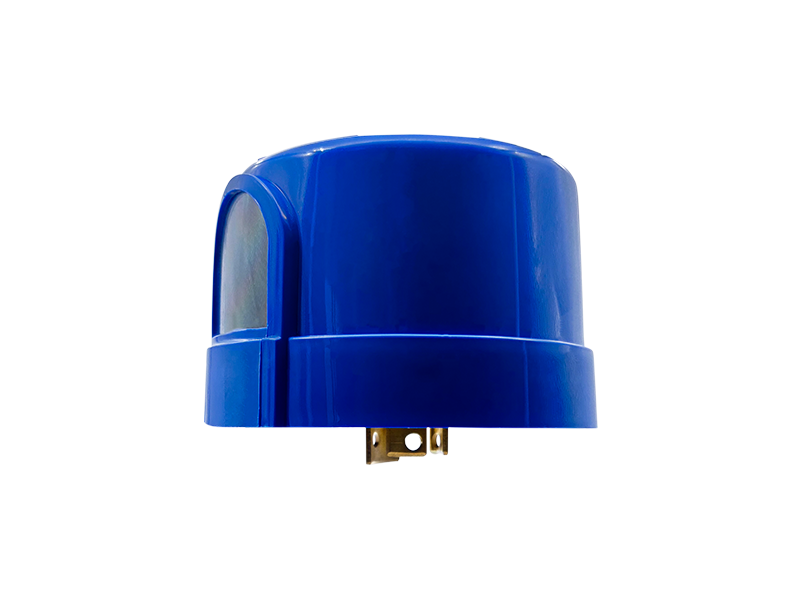
Environmental factors can amplify this issue indirectly. While direct sunlight or shadows aren't the culprits here, ambient temperature swings affect relay coil resistance, making the system more prone to instability under borderline loads. In colder climates, the coil might require more current to engage fully, exacerbating any load-related hesitations. Conversely, high heat can degrade insulation, leading to micro-arcing that mimics pulsing. Users in variable weather zones often report seasonal spikes in this problem, underscoring the need for load-specific evaluations. Integrating advanced options from street light controller manufacturers can help mitigate these challenges through better compatibility features.
To contextualize, consider a scenario from a suburban community where porch lights began blinking after a neighborhood-wide bulb upgrade. Investigations revealed that the sensors, optimized for higher wattages, couldn't sustain the lower draw, resulting in relay bounce. Addressing this involved not just replacement but recalibrating expectations around load types. Incorporating surge suppression can help, as transient spikes from grid events mimic load variations, fooling the relay into rapid cycles.
Power factor plays a subtle yet significant role too. Bulbs with poor power factor—meaning they don't draw current in phase with voltage—can create apparent load inconsistencies. This is especially relevant in setups with dimmers or multi-bulb circuits, where phase differences accumulate. Engineers recommend checking the power factor rating of bulbs; anything below 0.9 might contribute to instability. In commercial applications like parking areas, where multiple fixtures share a circuit, cumulative effects can turn minor mismatches into widespread pulsing. Models like the LongJoin jl 103a are often recommended for their ability to handle diverse load profiles effectively.
Lastly, aging relays within the unit itself contribute. Over cycles—typically rated for 50,000 to 100,000 operations—the contacts wear, increasing bounce time. If the load doesn't provide enough arc suppression, this wear accelerates, leading to more frequent occurrences. Sourcing reliable units such as the LongJoin jl 202a ensures higher cycle ratings, mitigating this over time.
Advanced Diagnostic Approaches for Pinpointing Issues
Moving beyond basic checks, sophisticated diagnostics can reveal hidden contributors to instability. Begin with waveform analysis using an oscilloscope, if accessible, to capture the voltage across the relay contacts. Look for spikes or dropouts that indicate bounce; normal operation shows clean transitions, while problematic ones display jagged patterns. For DIY users without lab gear, affordable digital multimeters with frequency modes can approximate this by measuring AC ripple during operation.
Simulate load conditions in a controlled environment. Use a variable resistor or dummy load kit to mimic different bulb types, observing how the sensor responds. Start at full rated wattage and gradually reduce; noting the point where pulsing begins provides a threshold value. This method has proven effective in workshops, where technicians replicate field conditions to isolate variables. In one industrial case, this approach uncovered that LED drivers with switching frequencies close to the relay's natural resonance caused harmonic interference, solvable by adding filters. Accessories like the jl 208 shorting cap can be temporarily used during these tests to stabilize power flow.
Incorporate data logging for intermittent issues. Attach a low-cost logger to monitor voltage and current over 24-48 hours, correlating events with environmental logs like temperature from a nearby weather app. Patterns might emerge, such as pulsing during peak grid hours when voltage sags affect load perception. Software tools can plot this data, highlighting anomalies that manual observation misses. For enhanced precision, consider interfaces compatible with zhaga book 18 socket standards, which allow modular additions for better monitoring.
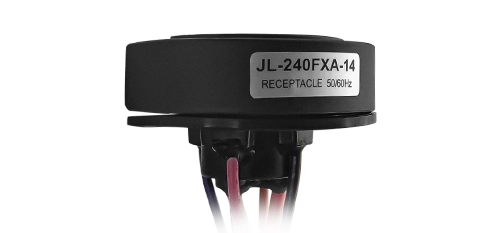
For networked or multi-fixture setups, employ isolation testing. Disconnect adjacent units one by one to see if crosstalk via shared neutrals is at play. Electromagnetic induction from nearby cables can induce false signals, mimicking load instability. Shielding tests, like wrapping foil around wires temporarily, can confirm this. Professionals often use this in high-density installations, where wiring proximity amplifies effects. Components such as the nema photocell receptacle provide robust connections that minimize such interference.
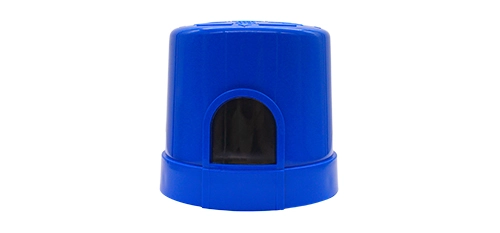
Consider firmware or calibration drifts in advanced units. Some modern sensors include microcontrollers that adapt thresholds over time; if corrupted by power surges, they might oscillate. Resetting to factory defaults—via a button or app—can resolve this. In a recent office park retrofit, this simple step fixed widespread issues traced to software glitches from incompatible loads. Utilizing a street light photocell sensor in hybrid setups can offer fallback reliability during diagnostics.
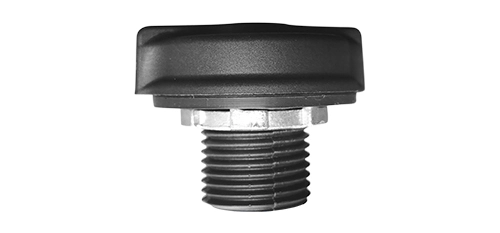
Finally, thermal imaging offers a non-invasive way to spot hot spots. Overheating relays or connections glow under infrared, indicating resistance buildup that leads to bounce. Portable cameras make this accessible, turning guesswork into evidence-based fixes. For comprehensive systems, integrating a zhaga receptacle enables easy swaps of diagnostic modules.
Long-Term Strategies to Prevent Recurrence
Prevention hinges on proactive design and maintenance tailored to avoid known pitfalls. Start with load-matched selections: when upgrading bulbs, choose sensors rated for the specific type, such as those certified for low-wattage LEDs. Specifications often list minimum loads; adhering to these prevents undercurrent issues. In planning phases, simulate the entire circuit using software like ETAP to predict behaviors before installation.
Incorporate buffering components. Adding a small resistor in parallel with the load can provide the necessary holding current without altering brightness. This "snubber" circuit absorbs transients, stabilizing the relay. For larger systems, opt for solid-state relays (SSRs) over mechanical ones; SSRs lack moving parts, eliminating bounce altogether. Though costlier upfront, they pay off in reliability, especially in vibration-prone areas like near roads. Options like the LongJoin jl 205c incorporate such advanced relay tech for smoother performance.
Regular auditing forms the backbone of prevention. Schedule biannual load tests, measuring draw under operating conditions. Compare against baselines to catch drifts early. In humid environments, apply dielectric grease to connections to ward off corrosion, which can mimic load variations over time. Using a nema shorting cap during audits ensures consistent power without sensor variables.
Education and documentation enhance longevity. Train users on compatible upgrades, and label fixtures with load specs. In community settings, this reduces unauthorized changes that trigger problems. A housing association example showed that after implementing guidelines, incidents dropped by 60%, thanks to informed choices. For residential applications, a light sensor bulb socket can simplify user-level adjustments.
Explore hybrid integrations. Pairing with voltage regulators ensures stable input, buffering against grid fluctuations that exacerbate mismatches. For expansive arrays, centralized monitoring via IoT hubs can alert to anomalies before they manifest as visible issues. Reliable products like the LongJoin photocell series support such integrations seamlessly.
Sustainability angles tie in: stable systems reduce waste from premature replacements. By minimizing pulsing, you extend bulb life, cutting e-waste. In eco-focused projects, this aligns with green certifications, adding value beyond functionality.
In essence, tackling recurrence demands a blend of foresight, tools, and habits. With these in place, your illumination stays steady, enhancing safety and efficiency night after night.
FAQs
1. How does voltage fluctuation contribute to light instability?
Voltage drops or surges from the grid can make the relay oscillate by altering perceived load, often fixed with stabilizers.
2. What role do bulb harmonics play in sensor issues?
Harmonics from non-linear bulbs distort waveforms, causing relay chatter; selecting high-power-factor options helps.
3. Can environmental vibrations affect relay performance?
Yes, vibrations from traffic or wind can wear contacts, leading to bounce; mounting dampeners reduces this.
4. How to choose sensors for mixed bulb types?
Look for universal models with broad load ratings to handle variations without instability.
5. What are signs of relay wear in sensors?
Increased noise during switching or delayed responses indicate degradation, warranting replacement.
References:
[1]. Wikipedia. (2023). "Electromagnetic relay." https://en.wikipedia.org/wiki/Relay
[2]. International Electrotechnical Commission. (2021). "IEC 61810-1: Electromechanical elementary relays – Part 1: General and safety requirements."
[3]. Institute of Electrical and Electronics Engineers. (2020). "IEEE Std 141-1993: IEEE Recommended Practice for Electric Power Distribution for Industrial Plants."
[4]. Al-Jaafreh, M.A., & Mokryani, G. (2020). "Planning and operation of LV distribution networks: A comprehensive review." IET Renewable Power Generation, 14(18), 3579-3598.
Other articles that may be of interest:
How Can You Adjust a Twist Lock Photocell for Optimal Performance?
What Is a Twist Lock Photocell and How Does It Work?
How to Bypass a Photocell Safely?
How to Replace an Outdoor Light Bulb Socket?
Why Do Some Street Lights Use Shorting Caps Instead of Photocells?
How to Install a Light Bulb Socket Adapter

 English