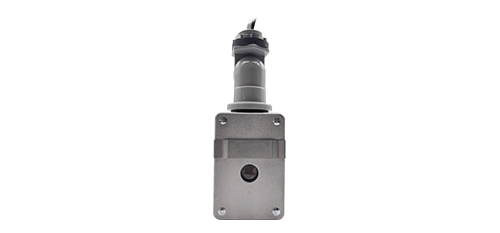
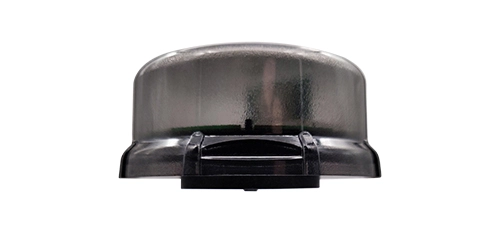
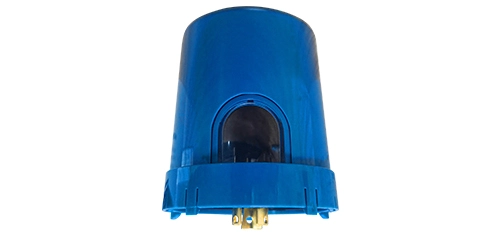
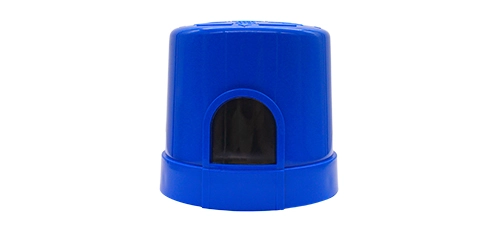
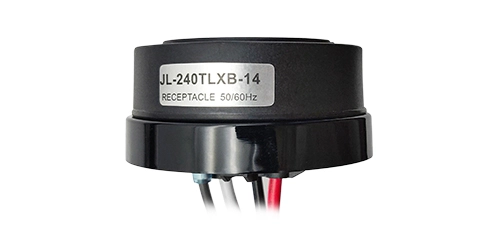
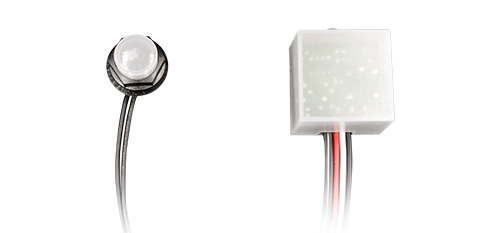
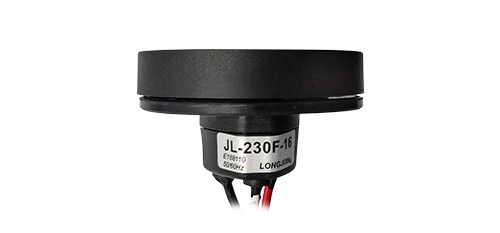
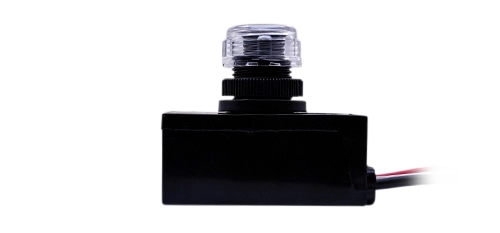
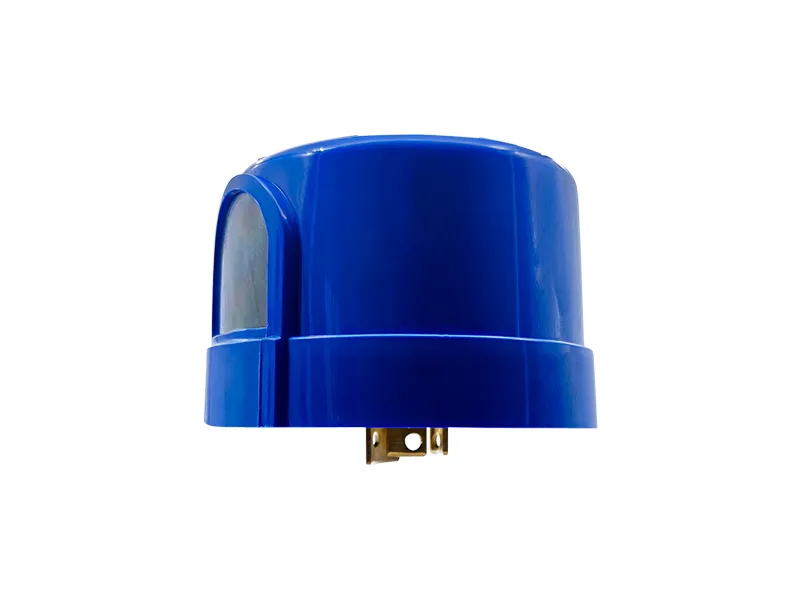
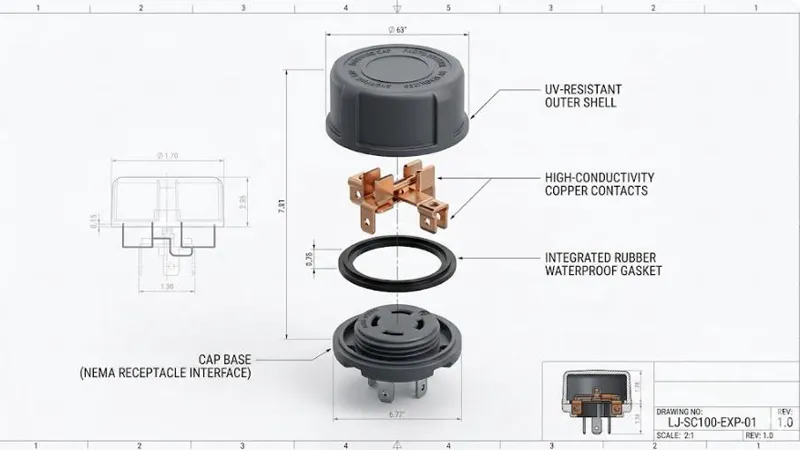
NEMA and Zhaga interfaces serve different outdoor lighting architectures. A NEMA photocell receptacle is generally preferred when the luminaire needs conventional twist-lock photocells, line-voltage switching, or established NEMA-based lighting controllers. Zhaga Book 18 receptacles are better suited to compact, modular smart-lighting designs using sensor or communication nodes with standardized power and data interfaces.
The correct choice should be based on the controller architecture, driver compatibility, dimming protocol, installation space, environmental protection, and future upgrade requirements rather than interface size alone.
What Is the Difference Between NEMA and Zhaga Receptacles?
The main difference is how power, control signals, and external lighting-control devices are integrated.
| Factor | NEMA Interface | Zhaga Book 18 Interface |
| Typical application | Photocells and outdoor lighting controllers | Sensors and communication nodes |
| Connection | Twist-lock | Compact locking interface |
| Power architecture | Commonly line-voltage based | Typically low-voltage DC with D4i-based systems |
| Control options | ON/OFF, 0-10V, DALI depending on configuration | Digital smart-lighting communication |
| Typical receptacle | 3-, 5- or 7-pin | Book 18 receptacle |
| Main advantage | Mature outdoor lighting ecosystem | Compact, modular smart-lighting architecture |
ANSI C136.41 defines the interface between external locking-type controls and roadway or area luminaires, including dimming functions for compatible NEMA receptacles.
Zhaga Book 18 defines a standardized interface between outdoor luminaires and sensing or communication modules. The specification covers mechanical fit, electrical connections, power and communication requirements, supporting interoperable smart-lighting systems when certified components are used.
When Should You Choose a NEMA Photocell Receptacle?
A NEMA photocell receptacle is a practical choice when the project uses twist-lock photocells or NEMA-style smart controllers.
A 3-pin receptacle is typically sufficient for basic power switching. Projects requiring dimming or networked control commonly use 5- or 7-pin configurations with additional signal contacts.
LongJoin's street lighting receptacle range includes NEMA 3-pin receptacles and NEMA dimming receptacles designed for different outdoor lighting control requirements.
NEMA is particularly suitable when:
Existing street lights already use NEMA controllers
The specification requires conventional photocell operation
0-10V or other compatible dimming control is required
Controllers need direct access to line power
Replacement compatibility with an established installed base is important
When Are Zhaga Book 18 Receptacles a Better Choice?
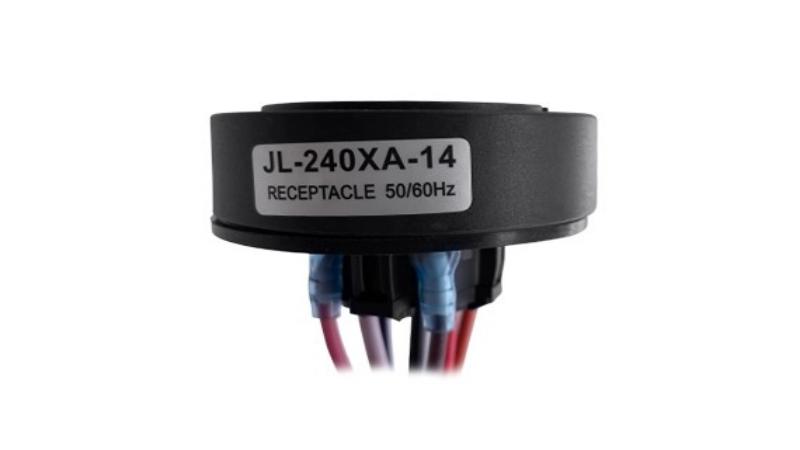
Zhaga Book 18 receptacles are well suited to newer smart street lighting projects where compact sensor and communication nodes are part of the luminaire design.
Book 18 supports standardized smart interfaces and forms an important part of the Zhaga-D4i ecosystem. Zhaga states that interoperability is assured when both the luminaire and the connected node meet the relevant Zhaga-D4i certification requirements.
For luminaire manufacturers, the smaller interface can also provide greater freedom when integrating sensors into compact fixture designs.
LongJoin's JL-700 series includes Book 18 receptacle configurations for roadway, area, commercial and other lighting applications.
Do Unused Receptacles Need Protective Caps?
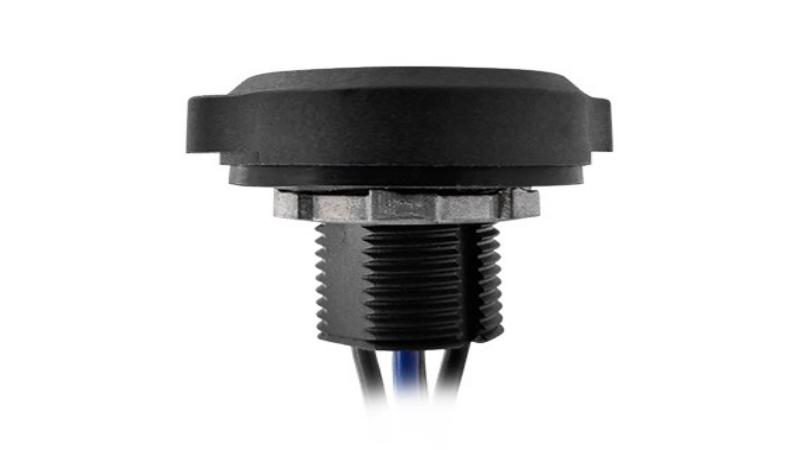
Yes. An unused outdoor control interface should be protected against environmental exposure until the photocell, sensor, or communication node is installed.
A Zhaga Book 18 protective cap helps close and protect an unused Zhaga interface during production, transportation, installation, commissioning, or future smart-control upgrades.
This is especially relevant when luminaires are supplied as "smart-ready" products. A city may install fixtures first and add communication nodes later. Protecting the interface helps maintain the intended sealing condition until the control device is installed.
LongJoin has developed protective components for its JL-700 Zhaga Book 18 interface system alongside its receptacle and controller products.
What Is a Shorting Cap Used for on a NEMA Receptacle?
A shorting cap keeps the luminaire powered while bypassing the photocontrol function.
The JL 208 shorting cap, for example, is designed for 3-, 5-, and 7-pin NEMA twist-lock receptacles. It can be used during maintenance, commissioning, testing, or before a final photocell or network controller is installed.
This is different from a simple protective cover. A shorting cap creates an electrical connection so the luminaire remains energized, while an open or protective cap may only protect or isolate the interface.
For project teams, that difference should be clearly specified in the bill of materials. Using the wrong accessory can either leave the fixture continuously powered or prevent it from operating altogether.
How Do You Select the Correct Interface and Accessories?
Start with the complete lighting-control architecture rather than purchasing the receptacle separately.
Confirm:
Whether the controller uses NEMA or Zhaga
Whether basic ON/OFF or dimming is required
Driver and control protocol compatibility
Available voltage and power architecture
Required IP protection
Controller installation position
Whether the project needs temporary shorting, open-circuit, or protective caps
Whether future smart-city nodes may be added
For large OEM or municipal projects, the receptacle, controller, driver, sealing components, and accessories should ideally be verified as a complete system before mass production.
Conclusion
NEMA and Zhaga interfaces are not simply interchangeable alternatives.
A NEMA photocell receptacle remains a strong choice for conventional photocells and established twist-lock lighting-control systems, while Zhaga Book 18 receptacles provide a compact and modular foundation for newer sensor- and communication-based smart lighting.
Accessories matter as well. A Zhaga Book 18 protective cap protects an unused smart-ready interface, while the JL 208 shorting cap maintains electrical continuity in compatible NEMA receptacles during commissioning or maintenance.
Selecting the receptacle and accessories together can reduce compatibility problems and simplify future lighting-control upgrades.
FAQs
Is Zhaga replacing NEMA for street lighting?
No. Both remain relevant because they support different lighting-control architectures and project requirements.
Can a NEMA photocell be installed in a Zhaga receptacle?
No. The mechanical and electrical interfaces are different.
What is the difference between a 3-pin and 7-pin NEMA receptacle?
A 3-pin interface mainly provides power switching, while a 7-pin receptacle adds contacts that can support dimming and additional control functions.
What does a JL 208 shorting cap do?
It bypasses the photocontrol function and keeps the luminaire powered through a compatible NEMA receptacle.
Why use a Zhaga Book 18 protective cap?
It protects an unused Zhaga interface before a sensor or communication node is installed.
Which interface is better for smart street lighting?
The answer depends on the system architecture. Zhaga is particularly suitable for compact D4i-based smart nodes, while NEMA remains widely used for outdoor network controllers and retrofit projects.

 English