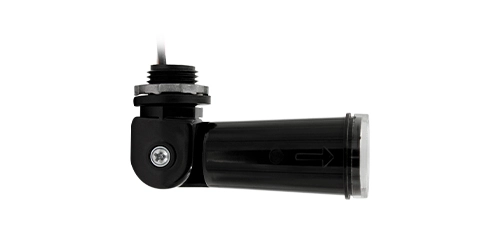
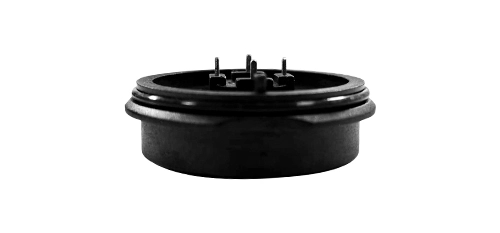
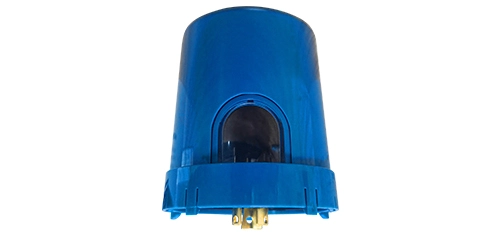
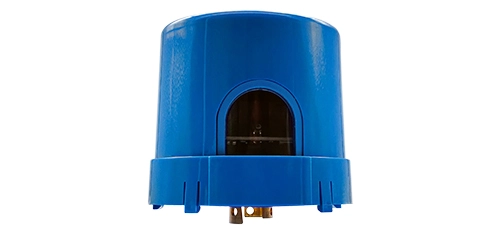
Choosing the right street light photocell sensor starts with the lighting system, not the sensor alone. For municipal roads, parking areas, campuses, industrial parks, and other commercial projects, buyers should verify the operating voltage, LED driver compatibility, photocontrol interface, switching thresholds, surge resistance, environmental performance, and expected failure behavior before approving a model.
For large projects, compatibility and long-term reliability usually matter more than choosing the lowest-cost photocell. A small mismatch can result in nuisance switching, premature controller failure, additional maintenance visits, or lights operating during daylight hours.
What Specifications Matter Most When Choosing a Street Light Photocell Sensor?
A suitable photocell sensor for street light applications should be evaluated as part of the complete luminaire and electrical system.
| Selection Factor | What to Check | Why It Matters |
| Operating voltage | Match the actual supply voltage and allowable range | Prevents incorrect operation or electrical damage |
| Load compatibility | LED driver, ballast and switching load | LED drivers can create high startup current |
| Interface | Direct-wire, NEMA locking type or other required interface | Determines installation and replacement compatibility |
| Switching level | Turn-on and turn-off light thresholds | Controls when the luminaire operates |
| Time delay | Delay before switching | Helps prevent false operation from headlights or temporary shadows |
| Surge protection | Protection appropriate for the installation environment | Important for exposed roadway lighting |
| Temperature range | Local minimum and maximum ambient temperature | Supports stable outdoor operation |
| Failure mode | Fail-on or fail-off | Affects what happens if the photocontrol fails |
ANSI C136.10-2023 covers physical and electrical interchangeability and testing for locking-type photocontrols and mating receptacles used in roadway and area lighting.
Real municipal specifications can be demanding. For example, Seattle City Light's streetlight photocontrol standard specifies requirements including 120–277 V operation, a -40°C to +70°C ambient range, surge protection, defined switching levels, and a fail-on design. These values should not be treated as universal requirements, but they illustrate the type of specifications municipal buyers may include in procurement documents.
Should You Choose a 3-Pin, 5-Pin, or 7-Pin Photocell?
The correct interface depends on whether the project only requires automatic dusk-to-dawn switching or also needs dimming and intelligent lighting functions.
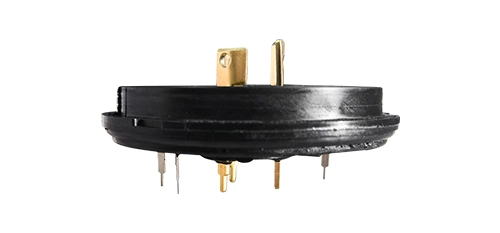
For straightforward street and area lighting, a locking photocontrol based on the conventional three-pole NEMA interface is commonly used for automatic ON/OFF control. When projects require additional dimming or control functions, 5- or 7-contact control devices may be required.
ANSI C136.41-2025 covers interfaces between external locking-type controls and roadway or area luminaires for functions including 0–10 V and DALI dimming.
This distinction becomes especially important when municipalities plan future smart-lighting upgrades. Selecting a receptacle and control architecture with future requirements in mind can reduce the need to replace luminaires later.
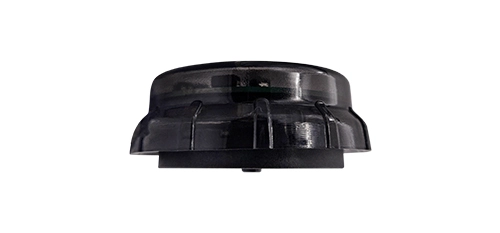
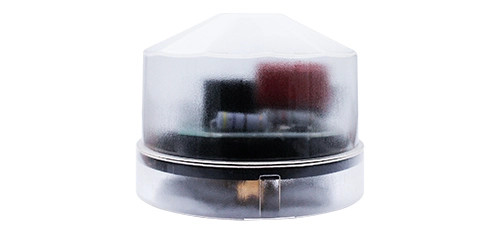
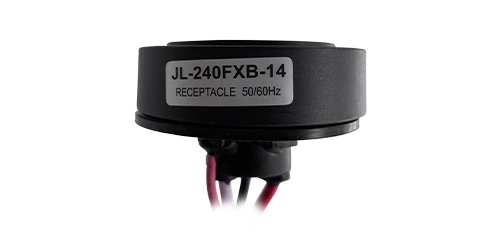
Long-Join's street lighting photocontrol range includes direct-wire, NEMA-interface, lamp-socket and other photocontrol configurations for different outdoor lighting systems.
What Voltage and Load Rating Should a Photo Sensor for Street Light Applications Have?
The photo sensor for street light should match both the supply voltage and the electrical characteristics of the LED driver.
Do not select a photocell only by comparing the fixture wattage with the maximum wattage printed on the photocontrol.
LED drivers may produce significant inrush current during startup. As a result, two 100 W luminaires can place very different switching demands on a photocontrol depending on their driver design.
For project approval, confirm:
Input voltage and frequency
LED driver type
Normal operating current
Startup or inrush characteristics
Photocontrol switching capacity
For large municipal or commercial orders, testing the photocontrol with the actual luminaire and LED driver is preferable to relying only on nominal ratings.
How Do Turn-On and Turn-Off Levels Affect Street Lighting?
The switching thresholds determine when the street light activates at dusk and switches off after sunrise.
A reliable street light photocell sensor normally uses different ON and OFF thresholds rather than switching at exactly the same light level. This difference helps maintain stable operation around dawn and dusk.
A time-delay function is also valuable. Passing vehicle headlights, lightning, temporary shadows, or rapidly changing weather should not cause the street light to switch repeatedly.
For municipal projects, buyers should therefore compare not only photocell sensitivity but also:
Turn-on level + turn-off level + switching ratio + response delay.
These parameters provide a better indication of real operating stability than sensitivity alone.
What Outdoor Protection Does a Photocell Sensor Need?
A street-light photocell remains exposed to heat, rain, humidity, dust, UV radiation, and electrical disturbances for years. Outdoor reliability should therefore be treated as a core specification rather than an optional feature.
Project engineers should evaluate the housing and sealing design, temperature range, UV resistance, surge protection, electrical component protection, and expected service life.
Street lighting photocontrols also need consistent sensing performance over time. If sensor characteristics drift significantly with age or temperature, lights may gradually switch on too early or remain on too long.
Should a Street Light Photocell Fail ON or Fail OFF?
For many roadway applications, fail-on operation is preferred because maintaining nighttime illumination can be more important than avoiding temporary daytime operation.
With fail-on behavior, certain photocontrol failures leave the luminaire energized rather than creating an unexpected dark location. Seattle City Light, for example, specifies fail-on behavior in its streetlight photocontrol material standard.
However, the required failure mode should always follow the project's technical specification, local requirements, and maintenance strategy.
What Should Be Tested Before a Large Municipal or Commercial Order?
A sample should be tested with the actual luminaire before approving thousands of units.
The most useful checks include voltage compatibility, LED driver startup behavior, dusk-to-dawn switching, response to temporary light interference, outdoor sealing, surge requirements, and mechanical fit with the specified receptacle.
Procurement teams should also request the relevant technical datasheet, testing information, certification documentation, model identification, and production specifications.
This step is particularly important when a project uses several luminaire suppliers. A photocontrol that performs correctly with one driver should not automatically be assumed to perform identically with every other driver.
Conclusion
The right photocell sensor for street light projects is not simply the model that turns a lamp on at night and off during the day.
Municipal and commercial buyers should evaluate the complete system: voltage, LED driver characteristics, receptacle interface, switching thresholds, time delay, surge protection, environmental durability, failure mode, and future control requirements.
For high-volume projects, confirming these factors through sample testing before mass production can significantly reduce compatibility problems and field maintenance risks.
Long-Join provides multiple street lighting photocell configurations for roadway, parking, commercial and outdoor lighting applications, allowing project teams to select photocontrols according to electrical specifications, installation interfaces and control requirements.
FAQs
What does a photocell sensor do on a street light?
It detects ambient light and automatically switches the street light on at dusk and off at dawn.
Can one photocell sensor work with all LED street lights?
No. Voltage, driver characteristics, load capacity and interface compatibility should be checked first.
Why does my street light photocell turn on during the day?
Possible causes include incorrect sensor orientation, obstruction, wiring problems, sensor failure or insufficient daylight reaching the sensor.
Do LED street lights need special photocells?
The photocell should be suitable for LED driver loads, especially their switching and startup characteristics.
What is a NEMA photocell used for?
A NEMA locking photocontrol provides a standardized, field-replaceable interface commonly used on roadway and area lighting fixtures.
Should a photocell be tested before bulk purchasing?
Yes. Testing the photocell with the actual luminaire and LED driver helps identify compatibility issues before large-scale installation.

 English