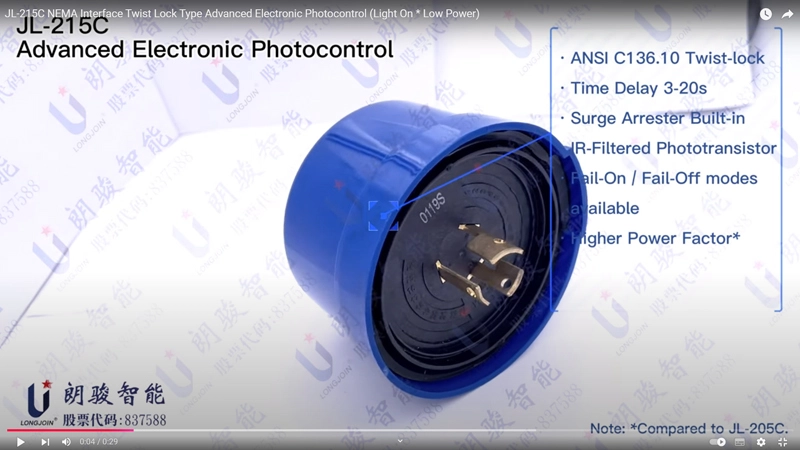
If you work with outdoor lighting — streetlights, parking lot fixtures, or area luminaires — you have almost certainly come across a photocell. These small dusk-to-dawn sensors have been around for decades, quietly turning lights on when the sun sets and off again at sunrise. They are simple, reliable, and still the backbone of most automated outdoor lighting systems.
But there is another component that often sits in the same twist-lock receptacle on top of a fixture, one that does not get nearly as much attention: the photocell cap. It looks similar. It installs the same way. Yet it serves a completely different purpose.
So what exactly is a photocell cap? When do you use one instead of a photocell? And why are these small accessories becoming increasingly important as lighting systems grow smarter? Let us walk through it.
First, a Quick Word on Photocells
To understand what a photocell cap does, it helps to know what a photocell — or photocontrol — is in the first place.
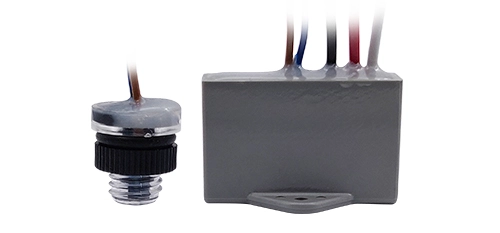
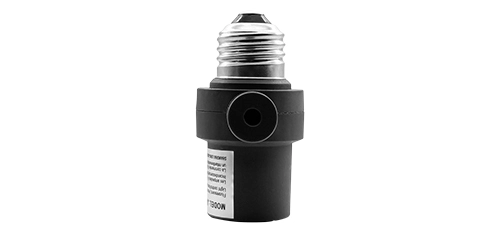
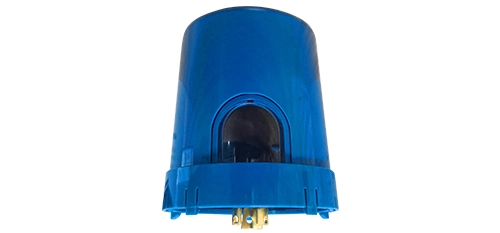
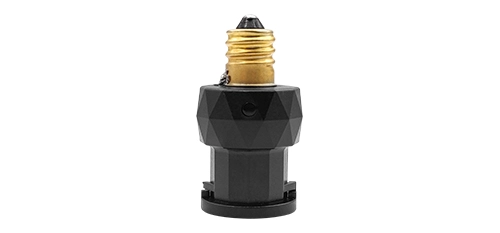
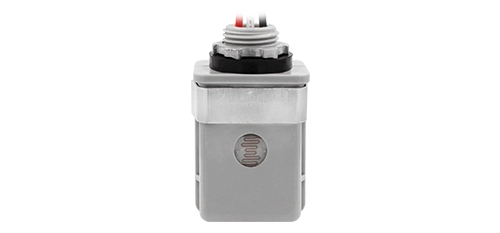
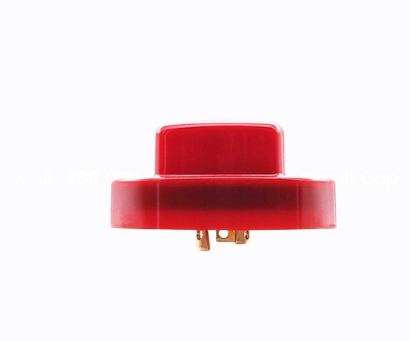
A photocell is a light-sensing device that switches a luminaire on and off based on ambient brightness. Inside the housing, a cadmium sulfide (CdS) or similar photoconductive element changes its electrical resistance in response to light levels. When daylight fades below a certain threshold — usually somewhere in the 10 to 16 lux range — the photocell closes the circuit and energizes the fixture. At dawn, when brightness rises again, it opens the circuit and turns the light off.
For years this was the default setup for streetlights and area lighting: mount a photocell into the NEMA twist-lock socket on top of the fixture, and the light takes care of itself. No timers, no manual switches, no control wiring.
But as outdoor lighting has evolved — toward LED conversions, networked controls, and smart city platforms — the role of the photocell has shifted. In many modern installations, a standalone dusk-to-dawn sensor is no longer the right choice. Sometimes you need the light to stay on regardless of what the sky is doing. And that is exactly where photocell caps come into play.
What Is a Photocell Cap?
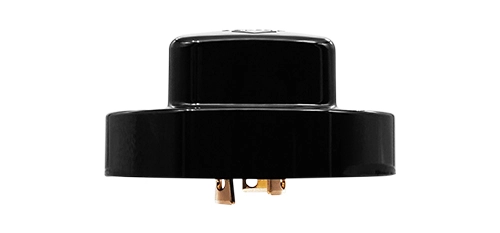
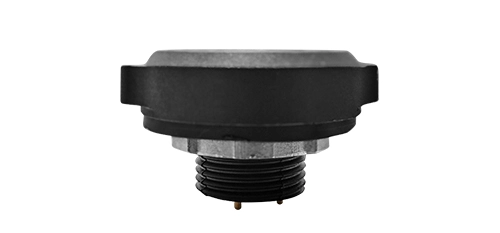
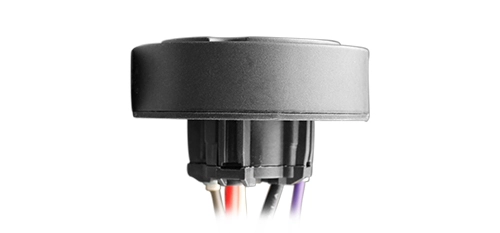
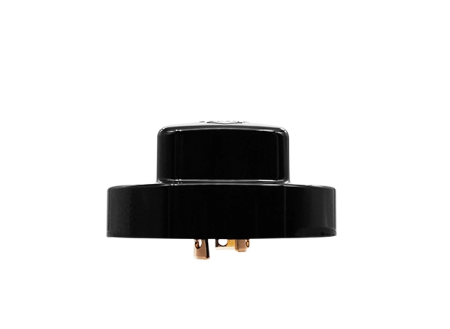
A photocell cap is a device that plugs into the same NEMA twist-lock receptacle that normally holds a photocell — but instead of sensing light and switching the fixture, it performs a simpler job. Depending on the type of cap, it either keeps the circuit closed (so the light stays on) or keeps it open (so no current flows at all).
The most common variety is the shorting cap. A shorting cap bridges specific pins inside the receptacle so the luminaire remains energized whenever the branch circuit is live. It does no sensing. It makes no decisions. It simply delivers continuous power. This turns the fixture into an always-on device, ready to be controlled by an external timer, a centralized lighting management system, or a wireless node mounted elsewhere.
There is also the open circuit cap. Instead of completing the circuit, it deliberately leaves it open, preventing current from reaching the fixture. This is useful during maintenance, debugging, or phased equipment upgrades when you want to be absolutely certain a particular light cannot power up unexpectedly.
Both types share a twist-lock form factor that complies with ANSI C136.10 and C136.41 standards, so they fit securely into the same receptacles already used across the industry. They are typically molded from UV-stabilized polycarbonate or PBT, rated for outdoor exposure, and designed to handle the same environmental stresses as the photocells they temporarily replace.
When Would You Use One?
This is where things get practical. If you are managing or installing outdoor lighting, here are a few real-world situations where photocell caps prove their worth.
During Maintenance and Troubleshooting
Imagine a technician needs to diagnose a problem with a streetlight during the daytime. The fixture is wired through a photocell, and the bright sun has it firmly switched off. A shorting cap lets the technician bypass the sensor instantly — no rewiring, no control system overrides — just power to the luminaire so work can proceed. When the job is done, the cap comes out and the photocell goes back in.
When a Photocell Fails
Photocells are durable, but they do not last forever. When one fails, it usually fails open or closed — either the light stays off all night, or it burns through the day. Getting a replacement can take days or weeks depending on stock. A shorting cap keeps the site lit in the meantime. It is a simple stopgap, but for a municipality or a property manager trying to keep a parking lot safe at night, it matters.
During New Installations and Commissioning
On large-scale projects, lighting fixtures often go up before the final control strategy is fully in place. Perhaps the smart nodes are still being procured, or the central management software is being configured. Shorting caps can be installed at each fixture so crews can verify that every light powers up correctly and that the wiring is sound, long before permanent photocells or controllers are plugged in.
For Centrally Controlled Lighting Networks
This is arguably the most significant use case today. Many cities and utilities are moving away from individual photocell control toward networked architectures where a single controller — or a group of wireless nodes — manages dozens or hundreds of fixtures. In these systems, placing a photocell on each light would actually cause problems: the local sensor could switch the fixture off while the central controller wants it on for dimming tests, or it could introduce boot-up delays when power cycles unexpectedly. A shorting cap removes that variable entirely. It ensures every fixture has constant power, and all switching decisions are made upstream.
Shorting Cap vs. Photocell: Not Competitors, Just Different Tools
A common point of confusion is whether a shorting cap photocell and a photocell are interchangeable or competing solutions. They are not. A photocell is an intelligent sensing device designed for long-term autonomous operation. A shorting cap is a pass-through device designed for temporary or bypass scenarios. They complement each other rather than competing, and many well-run lighting programs keep a supply of both on hand.
Think of it this way: a photocell is like a thermostat that adjusts heating based on room temperature. A shorting cap is like bypassing the thermostat so the heating runs continuously while you test the system or wait for a replacement part. You would not want to run your building that way permanently — but in the right moment, it is exactly what you need.
What to Look For in a Photocell Cap
If you are sourcing photocell caps for a project, here are a few practical things to keep in mind:
Pin Configuration
NEMA receptacles come in 3-pin, 5-pin, and 7-pin configurations. A 3-pin socket is standard for basic ON/OFF control, while 5-pin and 7-pin versions support dimming and communication lines respectively. Make sure the cap you select matches the pin layout on your fixtures. Many caps are designed to work across multiple configurations, but it is worth confirming.
Environmental Protection
Outdoor lighting accessories need to handle rain, dust, temperature swings, and UV exposure. Look for caps with IP65 or IP66 ratings post-installation, which indicate protection against water jets and dust ingress. Housing materials like polycarbonate and PBT hold up better over time than cheaper alternatives.
Standards Compliance
ANSI C136.10 governs the mechanical interface for twist-lock photocontrol receptacles. Choosing caps that comply with this standard ensures they fit properly and maintain the seal integrity of the socket.
Surge Protection Options
Some shorting caps can be equipped with varistors to protect LED drivers from transient voltage surges. This is particularly useful during the construction or commissioning phase, when the electrical environment on-site may be less stable than it will be in final operation.
If you are looking for reliable options, manufacturers like Shanghai Long-Join Intelligent Technology (LongJion) offer a range of photocell caps designed to meet these requirements, including the JL-208 shorting cap for temporary bypass applications and open circuit caps for maintenance safety. Products are built to ANSI standards and undergo standard production processes to ensure consistent quality and durability.
The Bigger Picture About Photocell Caps
Photocell caps are not glamorous components. They will never make headlines in a smart city press release. But they solve a set of practical, everyday problems that every lighting professional eventually faces: how to test a fixture during daylight, how to keep a site lit when a sensor fails, and how to prepare hundreds of luminaires for a control system that has not been installed yet.
In an industry that is rapidly shifting toward intelligent, networked infrastructure, these simple devices serve as a bridge between the old way of doing things and the new. They let you keep the lights on while the future catches up. And sometimes, that is exactly what a project needs, especially in systems designed around a street light automatic switch for reliable outdoor lighting control.

 English