Modern street lighting control systems work by combining sensors, communication hardware, and centralized management software to automate when lights turn on, off, or dim. These systems allow a city to reduce energy waste, improve maintenance efficiency, and respond dynamically to environmental conditions or safety needs. Instead of relying on a single type of device—such as a basic dusk-to-dawn sensor—today’s smart lighting networks use layered controls that integrate data, connectivity, and long-term asset management.
For many municipalities, upgrading to an intelligent control framework is no longer optional; it is a necessary evolution to support safer streets, reduced carbon emissions, and scalable urban infrastructure. Understanding how these systems operate helps clarify why networked lighting has quickly become the global standard.
The Evolution of Street Lighting: From Standalone Sensors to Connected Networks
Street lighting has transitioned through several generations of technology, each reflecting different priorities—first reliability, then automation, and now intelligence. Historically, city engineers relied on manual switching or simple time clocks to illuminate roadways. These methods, while predictable, lacked flexibility and often resulted in lights operating during daylight or failing to activate at dusk.
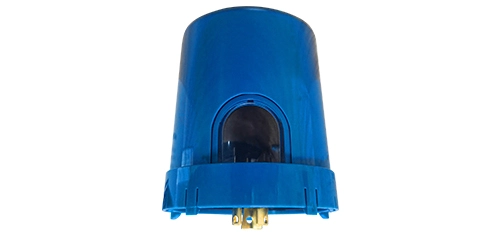
The arrival of photocell-based automation marked a significant improvement. A street light photocell sensor detects ambient brightness and activates the luminaire at sunset. This decentralized approach ensured self-contained control, reducing dependency on mechanical timers and centralized wiring. However, photocells also introduced limitations: environmental sensitivity, inconsistent switching times, and limited monitoring capability.
As cities modernized, the demand for more coordinated infrastructure led to two major innovations:
Cabinet-level controllers, which manage large lighting zones from a central point
Fully networked lighting systems, which connect each luminaire to a digital platform
These new generations enable fine-grained control, real-time diagnostics, and energy optimization, all of which are increasingly important in sustainable city planning.
Understanding the Core Components of a Modern Lighting Control System
A contemporary lighting control system includes multiple interconnected layers. Each element has a specific role, and together they create a flexible and resilient infrastructure.
1. Sensing and Detection Layer
At the foundation of the system are the components that monitor environmental conditions or operational status. This layer traditionally included basic photocells, but now encompasses a broader range of technology.
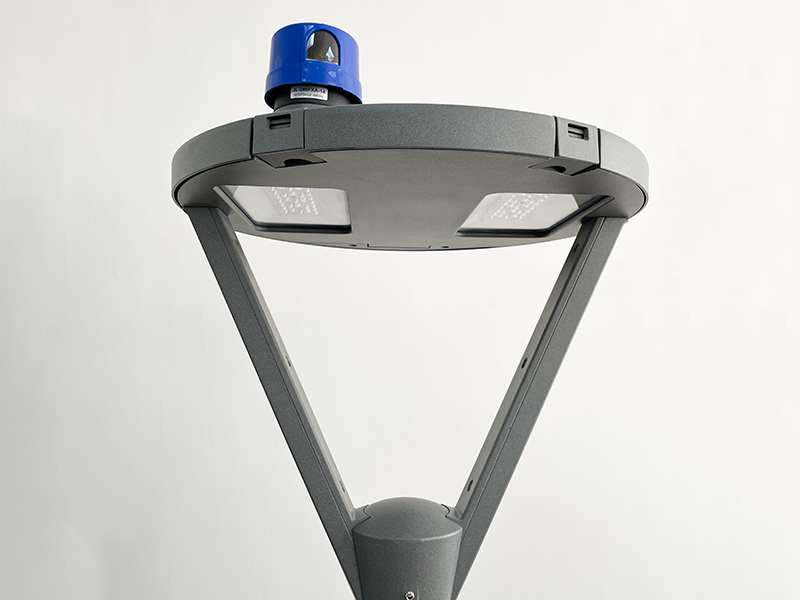
For example, a luminaire equipped with a dedicated sensing module may use a light sensor bulb socket to house its detection hardware. This arrangement allows the system to measure ambient light or activity levels, feeding data into the controller so it can determine when illumination is required. Some street lights also use motion or presence sensors for adaptive lighting, which brightens the luminaire when vehicles or pedestrians approach.
While photocells remain relevant, many cities are gradually integrating more sophisticated sensor arrays, enabling a shift toward predictive and adaptive control rather than simple on/off detection.
2. Electrical and Mechanical Interfaces
The hardware that connects sensors or controllers to the luminaire plays an essential role in ensuring compatibility and flexibility. For decades, the industry has relied on standardized interfaces that allow components from different vendors to interoperate.
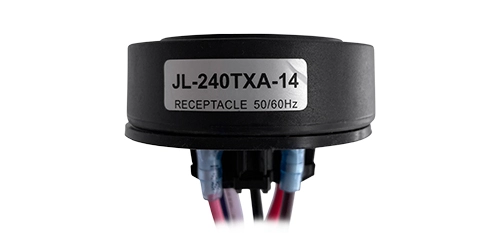
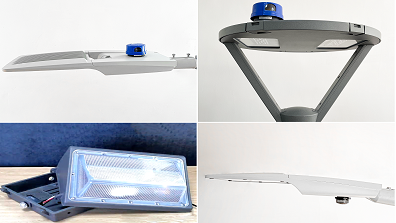
The nema photocell receptacle, for example, continues to be widely used in North America. It supports plug-and-play installation of photocells, network nodes, or accessories, allowing municipalities to change control strategies without replacing entire fixtures. In Europe and other regions where modularity is prioritized, the zhaga receptacle has grown in popularity thanks to its compact design and support for next-generation devices.
Similarly, many luminaires include the zhaga book 18 socket, which enables quick swapping of sensing or communication modules without recabling the fixture. This modular design philosophy is critical for cities that expect to upgrade system capabilities over time as smart-city technologies evolve.
3. Control Devices and Function Modules
The control layer determines how each luminaire behaves. Some systems use cabinet-based controllers, while others rely on individual fixture-level devices. The choice depends on the city’s infrastructure design and long-term management strategy.
A basic dusk-to-dawn luminaire may use a traditional photocell component such as a LongJoin photocell, which provides standalone brightness sensing with no need for network integration. Other installations incorporate specialized modules that support particular wiring configurations or operational needs, such as a LongJoin jl 103a or a LongJoin jl 202a, each of which is selected according to the fixture’s electrical architecture. More advanced projects may choose devices like a LongJoin jl 205c, which integrates seamlessly with mid-level control systems or specific luminaire families.
When a project transitions from photocell-based automation to centralized or networked control, installers commonly use accessories such as the jl 208 shorting cap, which bypasses sensor functionality and allows the luminaire to follow an upstream controller. This flexibility makes hardware transitions smoother and minimizes downtime during municipal upgrades.
4. Communication and Data Layer
At the heart of a modern system is communication. Networked street lights share data with a central management platform, enabling real-time visibility into every fixture’s status, energy use, and operational conditions.
Communication technologies include:
These technologies allow thousands of luminaires to communicate without manual intervention. The system can instantly identify outages, voltage problems, or abnormal behavior. This eliminates traditional patrol-based maintenance and shortens repair times, improving public safety and reducing labor costs.
5. Central Management Software
The system’s intelligence resides in a cloud-based or local management platform that aggregates data and issues commands. Operators can view performance dashboards, schedule dimming profiles, or analyze energy trends.
Key features typically include:
Map-based visualization of assets
Configurable lighting schedules
Remote activation and dimming
Predictive maintenance alerts
Energy and cost reporting
Integration with emergency or smart-city platforms
In cities where resiliency is a priority, the software can autonomously adjust lighting levels during extreme weather, power fluctuations, or unexpected traffic events.
Why Cities Are Transitioning to Network-Based Lighting Control
The global movement toward intelligent lighting is being driven by several factors: sustainability goals, labor shortages, public safety priorities, and the wider adoption of smart-city infrastructure.
1. Substantial Energy Savings
Lighting can represent 30–60% of a city’s total electricity use. Networked systems allow for advanced dimming strategies that can reduce consumption by up to 75% compared to traditional dusk-to-dawn systems. Cities can:
Lower brightness during low-traffic hours
Increase output during events or emergencies
Apply dynamic dimming based on sensor feedback
These capabilities reduce strain on the electrical grid and support decarbonization initiatives.
2. Improved Asset Management and Maintenance Efficiency
Rather than waiting for citizen reports or conducting manual inspections, cities with intelligent lighting systems receive automatic failure notifications. Maintenance teams can prioritize the most critical issues and avoid unnecessary service trips.
This is especially beneficial for large cities—where a single technician might be responsible for 10,000 or more luminaires—and for regions where safety risks increase significantly when outages go unaddressed.
3. Enhanced Public Safety and Urban Experience
Well-designed lighting networks allow operators to adjust brightness dynamically in response to real-time conditions. Areas with high pedestrian traffic can be illuminated more brightly, while parks or low-activity areas may be dimmed to reduce light pollution.
Adaptive lighting supports:
Emergency services can also request temporary lighting changes to support operations.
4. Future-Proofing Urban Infrastructure
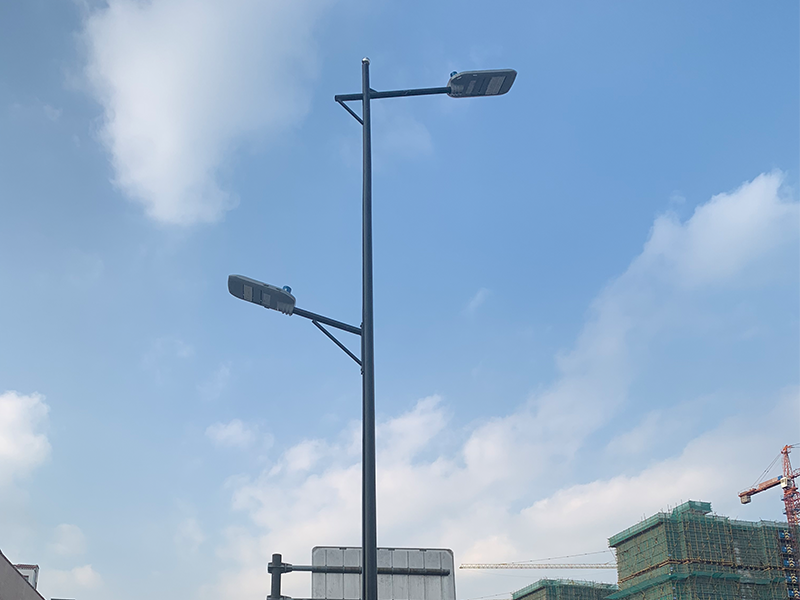
Cities around the world are building interconnected digital ecosystems. Lighting poles are increasingly used to host sensors, cameras, communication modules, and small-cell wireless equipment.
Smart lighting control systems provide the backbone for these applications, making them essential for:
Without networked lighting infrastructure, these solutions become more expensive and harder to deploy.
How Legacy Systems Coexist with Modern Networks
Even as cities embrace networked solutions, many still rely on traditional controls. This coexistence is possible because the lighting industry maintains strong backward compatibility.
For example:
A nema shorting cap can support centralized control even when the luminaire hardware originally relied on photocells.
Interfaces like NEMA and Zhaga ensure modularity, allowing fixtures to evolve alongside city requirements.
Support from street light controller manufacturers helps municipalities implement hybrid solutions during the transition period.
The result is a system architecture that balances innovation with practicality.
Key Challenges Cities Face When Implementing Intelligent Lighting
While the benefits are substantial, the transition to smart lighting also presents challenges:
1. Initial Investment Costs
Though long-term savings outweigh the costs, the upfront installation of nodes, communication equipment, and management platforms can strain municipal budgets. Grants, energy-performance contracts, and phased deployment strategies help mitigate this issue.
2. Cybersecurity Considerations
Any connected infrastructure must be protected against unauthorized access. Reputable system providers follow best practices in encryption, authentication, and network segmentation to safeguard critical urban operations.
3. Hardware and Compatibility Choices
Cities must evaluate which interfaces—NEMA, Zhaga, proprietary modules, or hybrid systems—best meet their long-term needs. Choosing standards-based components ensures broader vendor compatibility and reduces lifecycle risk.
The Future of Street Lighting Control Systems
Over the next decade, street lighting will continue evolving into a multifunctional urban platform. Anticipated advancements include:
AI-driven lighting algorithms
Integration with autonomous vehicle systems
Real-time air-quality monitoring
Predictive maintenance using machine learning
Seamless alignment with renewable energy grids
As sensors and network nodes become more compact and energy-efficient, luminaires will serve as critical data hubs throughout modern cities.
FAQs
1. How does a smart lighting system differ from a photocell-based system?
A smart system connects luminaires to a communication network and central software, enabling dimming schedules, remote monitoring, and data analytics—capabilities a photocell cannot provide.
2. Can older luminaires be retrofitted into a modern control network?
Yes. Many fixtures with standardized interfaces can be upgraded using network nodes, shorting caps, or modular receptacles.
3. Do networked systems still use photocells?
Some hybrid deployments use photocells at the fixture level, but most advanced systems replace them with network nodes for greater flexibility.
4. How much energy can smart street lighting save?
Depending on dimming strategies and sensor use, cities can achieve 40–75% reductions in electricity consumption.
5. Is smart street lighting difficult to maintain?
Networked systems typically reduce maintenance workload thanks to automated alerts and real-time diagnostics.
References
[1]. International Electrotechnical Commission. “IEC 62722-2-1: Luminaire Performance Requirements.”
[2]. Illuminating Engineering Society. “ANSI/IES RP-8: Recommended Practice for Roadway and Parking Facility Lighting.”
[3]. IEEE Standards Association. “IEEE P2144: Standard for Smart Street Lighting Systems.”

 English